Integrating the Howling Wolf Golden Moon Moonlight Logo into Professional Design Workflows
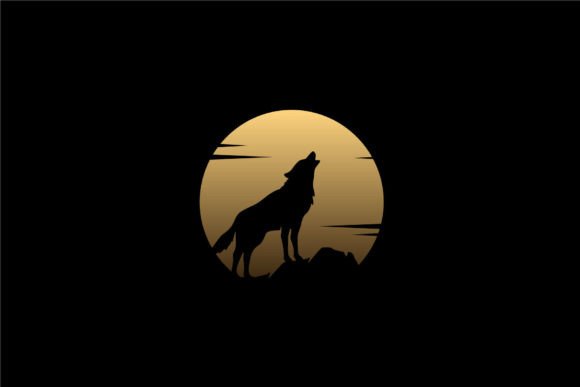
In the landscape of modern brand identity and creative asset management, the efficiency of your workflow often hinges on the quality and flexibility of your foundational elements. The Howling Wolf Golden Moon Moonlight Logo represents more than just a static image; it is a versatile vector asset designed to serve as a cornerstone for various creative projects. Whether you are a freelance graphic designer, a small business owner launching a new product line, or a marketer developing a seasonal campaign, understanding how to properly acquire, edit, and implement this specific logo template is crucial for maintaining professional standards and operational speed.
This asset, distributed as a single EPS 10 file containing 100 vector objects, is engineered for high-fidelity output across both digital and print media. However, possessing the file is only the first step. To truly leverage its potential, one must understand where it fits within a broader production pipeline, how to prepare the necessary software environment, and how to adapt its visual elements to meet specific branding requirements without compromising quality.
Pre-Production Preparation and Software Compatibility
Before integrating the Howling Wolf Golden Moon Moonlight Logo into any project, the immediate priority is establishing a compatible technical environment. The file format specified is EPS 10 (Encapsulated PostScript), a standard that ensures backward compatibility with older software versions while supporting modern transparency and gradient features. For the best results, the industry standard remains Adobe Illustrator. While other vector editors may open EPS files, Illustrator provides the most robust engine for handling complex paths, clipping masks, and the specific curve manipulations required for this design.
Upon acquiring the file, the initial workflow involves a quality control check. Open the document and inspect the layer structure. A well-organized vector file should allow you to isolate individual elements—such as the wolf silhouette, the golden moon disc, and the surrounding moonlight effects. This stage is critical for assessing whether the asset aligns with your current project's resolution and color space needs. If you are preparing for print, ensure your document color mode is set to CMYK; for digital applications, RGB is appropriate. The vector nature of the 100 included objects means you can scale the logo from a tiny favicon to a massive billboard without any loss of clarity, a key advantage over raster-based images.
It is also important to note the limitation regarding text within this template. The text included in the download is non-editable, meaning it has likely been converted to outlines or grouped in a way that prevents direct typing. If your workflow requires custom typography that matches the original aesthetic, you must identify the font used in the preview images. This often requires a separate step of font identification and installation before you begin the actual design work. Failing to account for this early can lead to bottlenecks later in the process when finalizing deliverables.
Customization and Adaptive Design Processes
Once the technical setup is complete, the core value of the Howling Wolf Golden Moon Moonlight Logo lies in its editability. The ability to change colors, remove unwanted text, edit curve paths, and reposition elements allows creators to adapt a generic template into a unique brand identifier. This phase of the workflow is where strategic decision-making intersects with technical execution.
Consider a scenario where a wellness brand wants to use this logo but requires a softer, less aggressive color palette than the default gold and black. Using the direct selection tool in your vector editor, you can isolate the "golden moon" element and apply a new gradient or solid fill that matches the brand's existing style guide. Because the file consists of distinct vector paths, these changes are non-destructive and easily reversible. You can experiment with different hues—perhaps shifting from gold to silver or bronze—to see which variation resonates best with your target audience before committing to a final version.
Furthermore, the modular nature of the 100 vector objects allows for significant structural changes. If the "howling wolf" element is too dominant for a specific application, such as a mobile app icon, you might choose to simplify the composition by removing peripheral moonlight rays or adjusting the curvature of the wolf's spine to create a more compact silhouette. This level of control is essential for maintaining consistency across different platforms. A logo that works perfectly on a website header might need simplification for a social media profile picture. Having the source file enables you to create these variations internally, rather than outsourcing minor adjustments, thereby saving time and budget.
Workflow Integration Across Project Phases
The utility of this logo asset extends through various stages of a project lifecycle. During the planning phase, it serves as a visual anchor for mood boards and concept presentations. Stakeholders can visualize the brand direction immediately, facilitating faster approval cycles. In the execution phase, the editable vectors allow for rapid iteration. As feedback comes in from clients or team members, modifications can be made in real-time. For instance, if a client requests the removal of specific text elements to create a cleaner look for merchandise packaging, the designer can simply toggle the visibility of those layers or delete the paths entirely.
In the post-production and deployment phase, the high-resolution vector source ensures that the final assets are ready for any medium. Whether exporting SVGs for web developers, PDFs for print vendors, or PNGs for social media managers, the source file acts as the single source of truth. This eliminates the common issue of "logo fragmentation," where different departments end up using slightly different versions of a brand mark. By centralizing the editing process around this one EPS file, organizations maintain strict quality control and brand consistency.
Strategic Considerations for Long-Term Use
Integrating the Howling Wolf Golden Moon Moonlight Logo into a professional repertoire requires a mindset focused on longevity and scalability. When purchasing and utilizing such assets, consider the long-term trajectory of the brand or project. Will the color scheme need to evolve? Does the logo need to function in monochrome for faxed documents or embossed materials? The flexibility of the EPS 10 format supports these future needs. Because you have access to the raw curves and paths, you can generate these alternative versions proactively, creating a comprehensive brand asset library before it is even requested.
Efficiency is also gained through organization. Once you have customized the logo to your specifications, save multiple versions with clear naming conventions (e.g., Logo_FullColor.ai, Logo_Monochrome.eps, Logo_IconOnly.svg). This practice streamlines future workflows, ensuring that anyone accessing the files can immediately locate the correct asset for their specific task. It reduces the risk of errors, such as sending a low-resolution raster image to a large-format printer, which can be costly to rectify.
Moreover, understanding the limitations of the template fosters better planning. Knowing that the text is non-editable prompts the designer to secure the necessary fonts at the outset. Recognizing that the file is a single EPS encourages the user to duplicate the artboard before making drastic changes, preserving the original template for future reuse or for other clients. These small procedural habits contribute to a smoother, more professional workflow.
Maximizing Value Through Practical Implementation
To fully realize the value of the Howling Wolf Golden Moon Moonlight Logo, treat it as a dynamic component of your creative toolkit rather than a finished product. Its true power is unlocked when it is manipulated to fit specific contexts. For educators teaching design principles, this file offers an excellent case study in vector manipulation, layer management, and color theory. For entrepreneurs, it provides a cost-effective solution for establishing a visual identity without the expense of a custom commission from scratch, provided they have the skills or resources to customize it effectively.
Ultimately, the success of integrating this asset depends on the synergy between the tool and the user's intent. By approaching the file with a clear plan for customization, respecting the technical requirements of the EPS format, and organizing the output for diverse use cases, professionals can ensure that the Howling Wolf Golden Moon Moonlight Logo enhances their brand narrative. It bridges the gap between conceptual ideation and tangible execution, offering a robust foundation upon which unique and compelling visual stories can be built.
In summary, the acquisition of this vector file is merely the beginning. The real work—and the real value—lies in the thoughtful application of its editable features. By adhering to best practices in file management, color adaptation, and workflow integration, you can transform a standard template into a distinctive and enduring element of your professional portfolio or business identity.