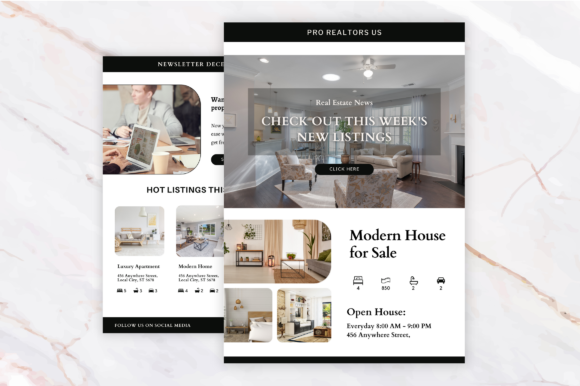
Real Estate Email Newsletter: A Powerful Tool for Building Relationships and Growing Your Business
In the fast-paced world of real estate, staying connected with your audience is essential. A Real Estate Email Newsletter is one of the most effective ways to maintain engagement, share valuable information, and promote your services. Whether you're a seasoned professional or just starting out, leveraging this tool can help you build trust, increase visibility, and drive more leads.
Why Real Estate Professionals Should Use an Email Newsletter
A well-crafted Real Estate Email Newsletter allows you to deliver targeted content directly to your audience's inbox. This means you can keep your clients and prospects informed about new listings, market trends, exclusive offers, and other important updates. It's a direct line of communication that fosters loyalty and keeps your brand top of mind.
Moreover, email newsletters are cost-effective compared to traditional marketing methods. They allow you to reach a large audience without the high costs associated with print or broadcast media. With the right design and content, your newsletter can become a trusted resource that your readers look forward to receiving.
Common Mistakes When Using a Real Estate Email Newsletter
While email newsletters offer many benefits, they can also lead to poor results if not executed properly. One common mistake is sending too much content at once. Overloading your subscribers with information can lead to disengagement and even unsubscribes. Instead, focus on delivering concise, relevant updates that add value to your audience.
Another mistake is neglecting to personalize your messages. Generic emails often go unread, as recipients don't feel they're tailored to their needs. Use segmentation to send targeted content based on your audience's interests, location, or buying history. Personalization increases open rates and improves the overall effectiveness of your campaign.
Overlooked Details That Can Impact Success
Many people overlook the importance of a clear call-to-action (CTA) in their email newsletters. Without a strong CTA, your readers may not know what to do next. Whether it's scheduling a consultation, visiting your website, or downloading a guide, make sure each email includes a specific and compelling CTA.
Additionally, some users fail to consider the design and formatting of their newsletter. A cluttered layout or unattractive visuals can turn off readers, regardless of the content's quality. Choose a clean, professional template that aligns with your brand and makes it easy for readers to navigate through the information.
How to Avoid These Pitfalls
To avoid these mistakes, start by planning your email strategy. Define your goals, identify your target audience, and outline the type of content you'll include in each newsletter. This will help you stay focused and ensure your messages are consistent and valuable.
Use tools like Canva to create visually appealing templates that are easy to edit. With features like customizable images, fonts, and colors, you can design a newsletter that reflects your brand while maintaining a professional appearance. Remember, the goal is to communicate clearly and effectively, not to overwhelm your audience with unnecessary elements.
What to Check Before Using a Real Estate Email Newsletter
Before launching your email newsletter, take the time to review the template and its features. Ensure that it's compatible with different devices and email clients so that your message looks good on all screens. Test your design across multiple platforms to avoid any formatting issues.
Also, verify that the template includes clear instructions and is easy to customize. If you're using a downloadable template, check that it comes with a ready-to-print version and editable files in formats like PDF or PNG. This ensures you can make adjustments quickly and efficiently without technical hurdles.
Realistic Examples of Effective Newsletters
Consider a real estate agent who sends a monthly newsletter highlighting new listings in a specific neighborhood. Each email includes high-quality images, a brief description of the property, and a link to view more details. The newsletter ends with a CTA encouraging readers to contact the agent for a private tour. This approach builds trust and drives engagement.
Another example is a real estate company that uses its newsletter to share market insights and tips for first-time homebuyers. By providing educational content, the company positions itself as an expert in the field, which can lead to increased credibility and customer loyalty.
Final Thoughts on Choosing the Right Newsletter Template
Choosing the right Real Estate Email Newsletter template is crucial for success. Look for a design that is both professional and user-friendly, allowing you to make changes quickly without sacrificing quality. Avoid templates that are too generic or difficult to customize, as they can hinder your ability to create a personalized experience for your audience.
Remember, the goal of your newsletter is to engage, inform, and convert. By avoiding common mistakes, focusing on practical advice, and selecting the right tools, you can create a powerful marketing asset that supports your real estate business and strengthens your relationships with clients and customers.