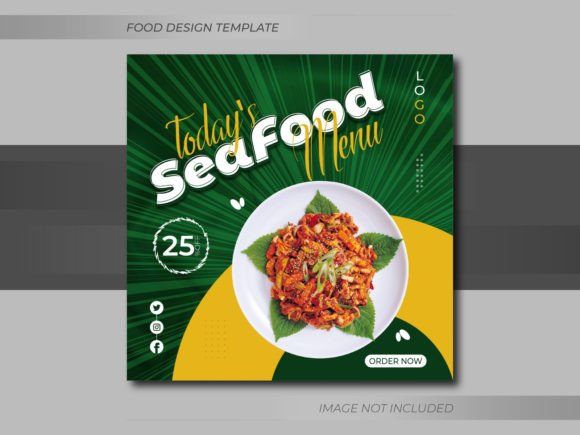
Elevating Culinary Marketing with High-Quality Delicious Seafood Menu Social Media Post Designs
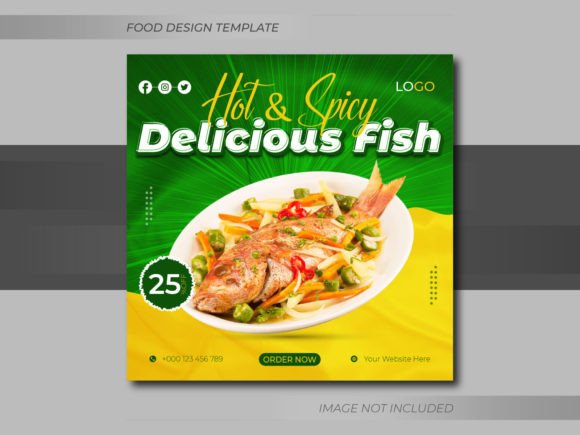
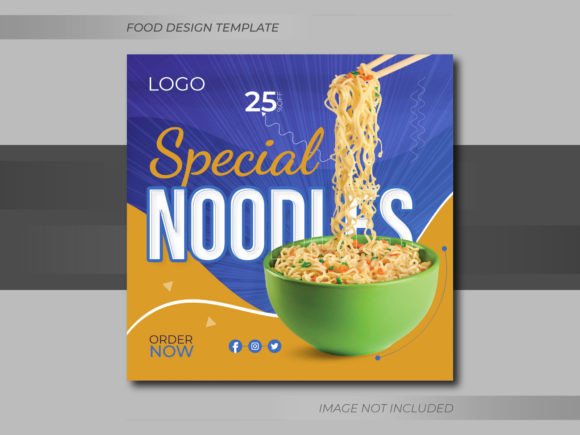
In the competitive landscape of the modern restaurant industry, visual appeal is often the primary driver of customer engagement. For establishments specializing in oceanic cuisine, the challenge lies not only in preparing exquisite dishes but also in translating that freshness and flavor into a digital format that stops the scroll. A Delicious Seafood Menu Social Media Post serves as the digital storefront for a restaurant, acting as the first point of contact for potential diners browsing Instagram, Facebook, or Pinterest. The effectiveness of these posts relies heavily on the quality of the underlying design assets, specifically those that offer high-resolution vector capabilities, customizable layouts, and eye-catching color palettes.
The transition from traditional print advertising to dynamic social media promotion requires a shift in strategy. While a physical menu sits on a table, a digital banner must fight for attention in a saturated feed. This necessitates the use of professional-grade templates that are built on robust frameworks, such as Adobe Illustrator CC or CS6. These tools allow designers and business owners to manipulate vector graphics without losing fidelity, ensuring that every scale of a crab leg or glisten of a sauce looks crisp whether viewed on a smartphone screen or a large web banner.
The Critical Role of Vector Graphics in Food Promotion
When discussing the technical specifications of a premium design template, the distinction between raster and vector images is paramount. Many amateur designs rely on JPG files alone, which can become pixelated when resized or displayed on high-density retina screens. In contrast, a template provided in EPS (Encapsulated PostScript) or native Adobe Illustrator formats utilizes mathematical paths to define shapes. This means that a Delicious seafood menu social media promotion Instagram post design created with vectors can be scaled infinitely without any loss of quality.
For a restaurant owner, this technical advantage translates to versatility. A single vector-based design file can be adapted for an Instagram story, a Facebook cover photo, a website header, and even a printed flyer, all while maintaining a sharp 300 PPI (Pixels Per Inch) resolution suitable for print if needed. The ability to edit individual elements—such as changing the background hue to match a seasonal theme or adjusting the typography to highlight a daily special—is facilitated by the layered structure of these vector files. This flexibility ensures that the branding remains consistent across all platforms while allowing for rapid iteration based on inventory changes or promotional cycles.
Color Psychology and Visual Hierarchy in Seafood Marketing
The specification of "beautiful eye-catching color" in design templates is not merely an aesthetic choice; it is a psychological trigger. In the context of seafood, color plays a specific role in stimulating appetite and conveying freshness. Designs often utilize a palette dominated by cool blues and teals to evoke the ocean, contrasted with warm oranges, reds, and yellows that mimic cooked shellfish and grilled finishes. A well-structured web banner template leverages these colors to guide the viewer's eye through a specific visual hierarchy.
Effective designs place the most appetizing imagery at the focal point, using negative space to prevent clutter. The text, often containing the call to action or the name of the dish, is positioned to complement rather than compete with the food photography. Since these templates typically do not include images, the designer has the freedom to insert high-quality photography of their actual dishes. This customization is crucial because stock photos, while generic, rarely capture the unique plating style of a specific chef. By combining a professionally structured layout with authentic photography, the resulting Delicious Seafood Menu Social Media Post feels genuine and inviting.
Workflow Efficiency for Restaurant Owners and Creators
Time is a scarce resource for restaurant operators. The demand to constantly produce fresh content for social media can be overwhelming. This is where the value of a "Easy to Edit" and "Customize" template becomes evident. A ZIP format delivery containing organized layers allows even those with moderate design skills to make necessary updates quickly. Instead of starting from scratch for every holiday promotion or new menu launch, a business owner can open the EPS or AI file, swap the text, replace the placeholder image with a new photo of the catch of the day, and export the final JPG for immediate upload.
This workflow supports a consistent posting schedule, which is vital for algorithmic visibility on platforms like Instagram. Consistency builds brand recognition; when followers see a familiar color scheme and font style, they immediately associate the post with the restaurant. Furthermore, the use of free fonts included in these templates eliminates licensing issues and ensures that the design remains accessible to users who may not have an extensive library of paid typography. The focus remains on the content—the food—rather than the complexities of graphic design software.
Adaptability Across Digital Platforms
The digital ecosystem is fragmented, with each platform having its own dimension requirements and user behaviors. An asset designed for a square Instagram post may not fit a LinkedIn article header or a Twitter banner. High-quality templates address this by providing a foundation that is easily adaptable. Because the source files are vectors, resizing the canvas does not degrade the graphical elements. A web banner template derived from the same core design as an Instagram post ensures a unified brand voice across the entire online presence of the restaurant.
Consider the scenario of a summer seafood festival. A restaurant needs to promote the event on their website, send an email newsletter, and post teasers on social media. With a comprehensive design package, the core visual identity—the logo placement, the color gradients, and the typographic treatment—remains constant. Only the dimensions and specific copy change. This coherence reinforces the professional image of the establishment, signaling to customers that attention to detail is a priority, both in the kitchen and in the marketing department.
Technical Specifications and File Management
Understanding the file formats provided in these design packages is essential for maximizing their utility. The inclusion of RGB color mode files is standard for digital display, ensuring that colors appear vibrant on screens. However, the availability of high-resolution sources means that if a restaurant decides to print table tents or window decals, the files are ready for conversion to CMYK without needing to recreate the artwork. The 300 PPI specification guarantees that any print output will be sharp and professional.
The organization of the ZIP file is another critical aspect. Professional templates separate background elements, image placeholders, text layers, and decorative vectors into distinct groups. This logical structure reduces the learning curve for new users. When a user opens the file in Adobe Illustrator, they can easily locate the "Image Here" layer, clip their own photo into the mask, and adjust the text box. This streamlined process encourages experimentation. A chef might try different angles of a dish or test various headline fonts to see which generates more engagement, all within a safe, non-destructive editing environment.
Maximizing Engagement Through Strategic Design
The ultimate goal of any Delicious seafood menu social media promotion Instagram post design is to drive action. Whether that action is clicking a link to reserve a table, sharing the post with a friend, or simply saving the image for future reference, the design must facilitate this behavior. Strategic use of whitespace, clear and legible typography, and compelling visual cues are all engineered into high-quality templates.
For instance, a design might feature a bold, sans-serif font for the price or the name of a limited-time offer, drawing immediate attention. Subtle textures or gradients in the background can add depth without distracting from the main subject. The "eye-catching" nature of these templates comes from a balanced composition that adheres to design principles such as the rule of thirds or golden ratio, even if the user is not consciously aware of them. By utilizing these pre-engineered compositions, restaurants can ensure their marketing materials look polished and intentional.
The Intersection of Artistry and Commerce
In the culinary world, the presentation of food is an art form. Digital marketing extends this artistry into the virtual realm. A poorly designed social media post can undermine the perceived quality of the food, suggesting a lack of care or professionalism. Conversely, a stunning, well-executed graphic elevates the brand, creating an expectation of excellence before the customer even steps foot in the restaurant. The investment in high-quality, editable vector templates is an investment in the brand's reputation.
Moreover, these tools democratize high-end design. Previously, achieving this level of visual sophistication required hiring expensive agencies for every single update. Now, with access to customizable EPS and AI files, small business owners and independent creators can maintain a premium aesthetic. This levels the playing field, allowing local seafood shacks to compete visually with large chains. The ability to rapidly respond to trends—such as posting about a sudden influx of fresh lobsters or a storm-delayed shipment—keeps the audience engaged and informed.
As social media algorithms continue to prioritize visual content and engagement rates, the importance of distinctive, high-quality imagery cannot be overstated. A Delicious Seafood Menu Social Media Post is more than just a picture of food; it is a carefully constructed piece of communication that blends color theory, typography, and layout to tell a story. By leveraging robust design templates that offer flexibility, resolution, and ease of use, food businesses can craft a narrative that resonates with their audience, drives traffic, and ultimately fills seats. The fusion of culinary expertise with strategic digital design creates a powerful synergy that defines success in the modern hospitality industry.